
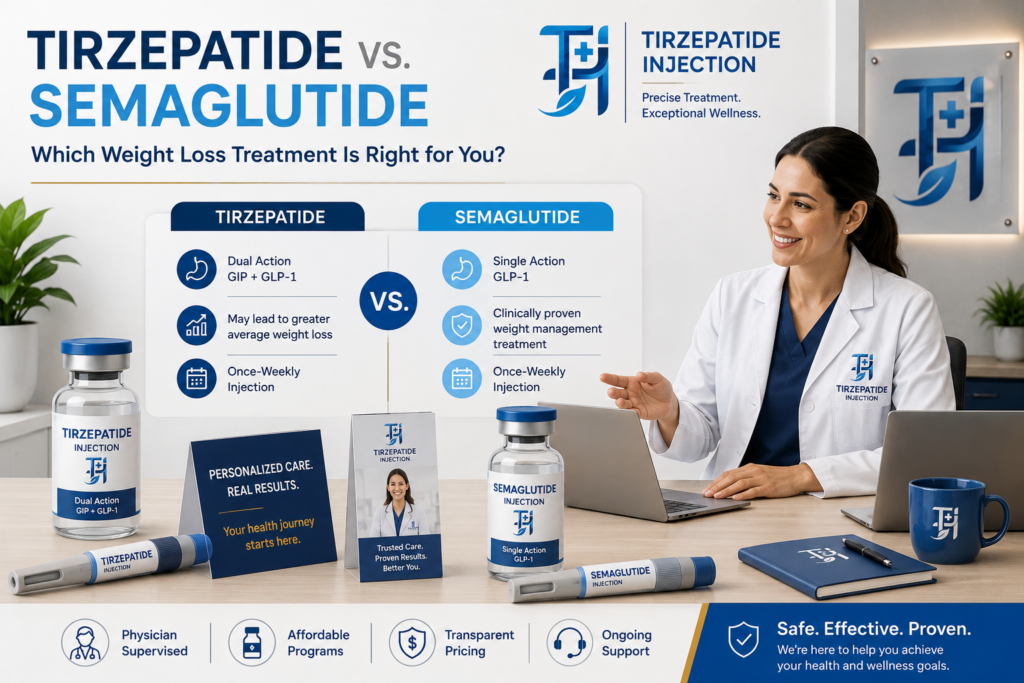
Choosing a weight-loss medication can be confusing, especially when two of the most discussed options are tirzepatide and semaglutide.
Both are prescription medications used as part of medical weight-management treatment. Both can help reduce appetite and food intake, but they work differently in the body and may produce different results.
So, which is better for weight loss: tirzepatide or semaglutide?
The answer is not the same for everyone. However, current head-to-head research provides useful information. In the 72-week SURMOUNT-5 trial involving adults with obesity who did not have type 2 diabetes, tirzepatide produced a greater average reduction in body weight than semaglutide.
Let’s look at the differences in a simple way.
What Is Tirzepatide?
Tirzepatide is a prescription medication that activates two hormone receptors: GIP and GLP-1.
This dual action can influence appetite, food intake, blood sugar regulation, and other metabolic processes.
In the United States, tirzepatide is marketed as Zepbound for chronic weight management in eligible adults, alongside a reduced-calorie diet and increased physical activity. It is also marketed as Mounjaro for certain adults with type 2 diabetes.
For weight management, Zepbound is administered once weekly, with dosing gradually increased according to the prescribing information.
What Is Semaglutide?
Semaglutide is a GLP-1 receptor agonist.
For chronic weight management, the FDA-approved brand Wegovy is used together with a reduced-calorie diet and increased physical activity for eligible patients.
Current FDA labeling includes weight reduction and long-term weight maintenance for adults with obesity or adults who are overweight with at least one weight-related condition.
Wegovy injection is administered once weekly and uses gradual dose escalation before reaching an appropriate maintenance dose.
Tirzepatide vs. Semaglutide: The Main Difference
The simplest way to understand the difference is:
| Feature | Tirzepatide | Semaglutide |
| Main receptor activity | GIP + GLP-1 | GLP-1 |
| Weight-management brand | Zepbound | Wegovy |
| Administration | Once weekly injection | Once weekly injection |
| Appetite effects | Can reduce appetite and food intake | Can reduce appetite and food intake |
| Dose escalation | Yes | Yes |
| Prescription required | Yes | Yes |
The biggest biological difference is that tirzepatide activates both GIP and GLP-1 receptors, whereas semaglutide primarily activates the GLP-1 receptor.
Which Works Better for Weight Loss?
Current head-to-head evidence favors tirzepatide for average weight reduction in a specific population.
In SURMOUNT-5, 751 adults with obesity but without type 2 diabetes were randomly assigned to maximum tolerated doses of tirzepatide or semaglutide for 72 weeks.
The average weight change was:
- Tirzepatide: −20.2%
- Semaglutide: −13.7%
That represents a difference of approximately 6.5 percentage points in average body-weight reduction. Tirzepatide also produced a greater average reduction in waist circumference.
However, these numbers are trial averages, not guarantees. Individual outcomes can be different.
Why Might Tirzepatide Produce More Weight Loss?
One possible reason is its dual GIP and GLP-1 receptor activity.
GLP-1 signaling can influence appetite and food intake. Tirzepatide also activates the GIP receptor, creating a different pharmacological profile from a GLP-1-only medication.
But it would be inaccurate to say that everyone will automatically lose more weight with tirzepatide.
Your response can depend on:
- Starting weight
- Dose reached
- Treatment duration
- Diet and physical activity
- Medication adherence
- Medical conditions
- Other medications
- Individual response
This is why a healthcare professional should evaluate the complete picture rather than choosing medication based only on average clinical-trial results.
Tirzepatide vs. Semaglutide Side Effects
Both medications can cause gastrointestinal side effects.
Common reactions can include:
- Nausea
- Diarrhea
- Vomiting
- Constipation
- Abdominal discomfort
- Indigestion
In SURMOUNT-5, gastrointestinal adverse events were the most common with both treatments and were generally mild to moderate, particularly during dose escalation.
The FDA prescribing information for both medications also contains important warnings and precautions.
For example, the FDA-approved labeling for Zepbound includes warnings related to thyroid C-cell tumors, pancreatitis, gallbladder disease, acute kidney injury, hypoglycemia in certain combinations, and severe gastrointestinal adverse reactions.
Wegovy’s current FDA labeling similarly includes important warnings, including thyroid C-cell tumors, pancreatitis, gallbladder disease, acute kidney injury from volume depletion, and severe gastrointestinal adverse reactions.
This is why these medications should be used under appropriate medical supervision.
Is Tirzepatide Safer Than Semaglutide?
It would be too broad to say that either medication is universally safer.
Both have established safety information from clinical trials and FDA-approved prescribing information, but individual risk depends on the patient.
Your medical history matters.
For example, a healthcare provider may need to consider:
- Previous gastrointestinal problems
- History of pancreatitis
- Gallbladder problems
- Diabetes medications
- Kidney function
- Allergies
- Pregnancy or plans for pregnancy
- Other prescription medications
The right medication is therefore not simply the one with the highest average weight-loss percentage.
How Long Does It Take to See Weight Loss?
Weight loss generally occurs over time rather than immediately.
Both medications use gradual dose escalation, which allows the prescribed dose to increase over time based on the treatment plan and tolerability.
Some people notice changes relatively early, while others see more gradual progress.
Your healthcare provider may evaluate:
- Weight change
- Appetite
- Side effects
- Treatment adherence
- Other health measurements
The goal should be sustainable weight management rather than trying to achieve the fastest possible result.
Can You Switch From Semaglutide to Tirzepatide?
Some patients may be able to switch between medications, but this should be handled by a healthcare professional.
The correct transition depends on:
- Your current medication
- Current dose
- How long you have been taking it
- Side effects
- Medical history
- Other medications
Do not take both medications together or change doses on your own.
The FDA-approved Zepbound labeling states that coadministration with other tirzepatide-containing products or GLP-1 receptor agonists is not recommended.
Which Is More Affordable: Tirzepatide or Semaglutide?
There is no single answer because medication costs can vary.
Your actual out-of-pocket expense may depend on:
- Insurance coverage
- Manufacturer programs
- Medication dose
- Pharmacy
- Provider fees
- Telehealth services
- Follow-up care
- Medication quantity
If you are paying without insurance, don’t compare only the advertised monthly price.
Instead, compare the complete treatment cost and determine what is included.
For example, ask whether the quoted price includes:
- Medical consultation
- Prescription evaluation
- Medication
- Follow-up visits
- Supplies
- Shipping
This gives you a more realistic comparison.
Tirzepatide or Semaglutide: Which One Should You Choose?
There is no universal winner.
If your primary concern is average weight-loss effectiveness, current head-to-head evidence gives tirzepatide an advantage in adults with obesity without type 2 diabetes.
But effectiveness is only one part of the decision.
Your healthcare provider should also consider:
Medical history + treatment goals + potential risks + tolerability + cost + other medications
A medication that works well in clinical trials still needs to be appropriate for the individual patient.
Can You Use Tirzepatide or Semaglutide Without Insurance?
Insurance is not the only way to access prescription treatment.
Eligible patients may use self-pay treatment when a healthcare professional determines that prescription therapy is appropriate.
However, cash-pay patients should be particularly careful about comparing:
- Total price
- Medication source
- Provider credentials
- Pharmacy
- Follow-up care
- Dosing instructions
- Additional fees
The FDA has warned consumers about unapproved GLP-1 products and has reported adverse events associated with compounded semaglutide and tirzepatide. Patients should discuss compounded products and dosing with a healthcare professional and understand exactly what product they are receiving.
Why Medical Supervision Matters
Tirzepatide and semaglutide are not simply supplements that can be selected based on price or online reviews.
They are prescription medications with specific indications, dosing schedules, contraindications, warnings, and potential adverse effects.
A medically supervised program can help determine whether treatment is appropriate and monitor how you respond over time.
The objective should be safe, evidence-based weight management, not simply choosing whichever medication has the most aggressive marketing claim.
Tirzepatide vs. Semaglutide: Quick Comparison
If you want the answer in a few seconds:
Tirzepatide:
Works through GIP and GLP-1 receptor pathways and produced greater average weight loss than semaglutide in the SURMOUNT-5 head-to-head trial among adults with obesity without type 2 diabetes.
Semaglutide:
Is a GLP-1 receptor agonist with established FDA-approved weight-management indications under the Wegovy brand.
Side effects:
Both commonly cause gastrointestinal symptoms, particularly during dose escalation.
Best choice:
Depends on your individual health, treatment goals, tolerability, medical history, and cost.
Frequently Asked Questions
-
Is tirzepatide more effective than semaglutide for weight loss?
For average weight reduction, yes, current head-to-head evidence shows greater weight loss with tirzepatide than semaglutide in adults with obesity who did not have type 2 diabetes. In SURMOUNT-5, average weight reduction at 72 weeks was 20.2% with tirzepatide versus 13.7% with semaglutide. Individual results vary.
-
What is the main difference between tirzepatide and semaglutide?
Tirzepatide activates both GIP and GLP-1 receptors, while semaglutide is a GLP-1 receptor agonist. Both can influence appetite and food intake and are used as part of medical weight-management treatment when prescribed appropriately.
-
Which is better for weight loss, tirzepatide or semaglutide?
Tirzepatide produced greater average weight loss than semaglutide in the SURMOUNT-5 trial, but that does not mean it is automatically the best choice for everyone. Medical history, tolerability, contraindications, treatment goals, and cost should also be considered.
-
How much more weight can you lose with tirzepatide compared with semaglutide?
In SURMOUNT-5, average weight reduction at 72 weeks was 20.2% with tirzepatide and 13.7% with semaglutide, a difference of about 6.5 percentage points. These are average clinical-trial results, not a guarantee of individual weight loss.
-
Do tirzepatide and semaglutide have the same side effects?
They have several similar side effects, particularly nausea, diarrhea, vomiting, constipation, and abdominal discomfort. Gastrointestinal reactions were common with both medications in the head-to-head trial and occurred mainly during dose escalation.
-
Which has fewer side effects, tirzepatide or semaglutide?
There is no universal answer. Both medications can cause gastrointestinal side effects, and individual tolerability differs. Your healthcare provider can consider your medical history and previous medication experience when deciding which treatment may be appropriate.
-
Which is more affordable, tirzepatide or semaglutide?
Neither is universally cheaper. Cash prices vary based on dose, pharmacy, insurance, provider services, and treatment program. When comparing options, look at the complete out-of-pocket cost rather than only the advertised monthly price.
-
Can you switch from semaglutide to tirzepatide?
Some patients may be able to switch, but the transition should be planned by a healthcare professional. The appropriate timing and dose depend on the medication you currently use, your dose, medical history, and tolerability. Do not switch or combine these medications without medical guidance.
-
How do I know whether tirzepatide or semaglutide is right for me?
A healthcare professional should consider your health history, weight-management goals, other medications, potential contraindications, previous treatment response, tolerability, and cost. Average clinical-trial results are useful, but they do not determine the right medication for every individual.
-
Can tirzepatide and semaglutide be used without insurance?
Yes. Eligible patients may receive prescription weight-management treatment on a self-pay basis when medically appropriate. Without insurance, compare the complete cost of medication, medical evaluation, follow-up care, supplies, pharmacy services, and shipping rather than relying on a single advertised price.
Final Takeaway
Tirzepatide and semaglutide are both established prescription options for medical weight management, but they are not identical medications.
The most important recent head-to-head evidence shows that tirzepatide produced greater average weight loss than semaglutide over 72 weeks in adults with obesity without type 2 diabetes.
That does not mean everyone should choose tirzepatide.
The better decision is the one that considers effectiveness, safety, tolerability, medical history, treatment goals, and affordability together.
If you are considering either medication, speak with a qualified healthcare professional before starting, stopping, or changing treatment.
Medical Disclaimer: This article is for educational purposes only and does not provide individual medical advice. Tirzepatide and semaglutide are prescription medications. Treatment decisions, dosing, and medication selection should be determined by a qualified healthcare professional.